60 happy Easter Instagram post ideas with examples for 2027

Count back seven weeks from Easter Sunday, 28 March 2027, and you land on 7 February. That is roughly the day most small businesses think they have plenty of time. It is also the week a family decides who is hosting lunch, a school sends home its holiday dates, and a few early planners start looking for a bakery, a florist or a place to book for the long weekend.
By the time the shop window has eggs in it, the people who order ahead have mostly chosen. The best Easter Instagram post ideas are therefore not a single picture on the day. They are a short run of useful posts that starts in February, tightens into cut-offs in March, goes quiet and warm over the holy days, and picks up again on the Monday.
This page gives you 60 Easter Instagram post ideas in eight goal groups, a dated timeline from early February to the week after Easter, a bank of captions and greetings, and clear advice on tone for religious and secular audiences. Every example business is made up, so no real brand is meant.
If you want to see how real accounts in your area handle the season, search "easter pre-order" or "easter opening hours" in Socialmon and look at which posts earned saves and replies. Ten minutes of that will show you what your neighbours already post, and which ideas have started to look tired.
One date, several calendars: what Easter means for your audience
Easter is the most important day of the Christian year, and for many people it is also a spring break, a family meal and a chocolate holiday. Those three meanings overlap, but they do not belong to the same people. Before you plan a single post, decide which of them your account is speaking to.
The calendar matters as much as the meaning. Easter does not fall on the same date everywhere, and the days around it are public holidays in some countries and ordinary working days in others.
The 2027 dates to plan around
Western Easter Sunday in 2027 is on 28 March. Good Friday is 26 March, Palm Sunday is 21 March, and Easter Monday is 29 March. Ash Wednesday, the start of Lent for many Western churches, is on 10 February.
Orthodox Easter, which many Orthodox churches date by a different calendar, falls later, on Sunday 2 May 2027. Orthodox Good Friday is then on 30 April. If your customers include Greek, Russian, Serbian, Romanian, Coptic or other Orthodox communities, you have a second Easter to plan for five weeks after the first.
Easter follows a fixed rule, so these dates are stable, but local church calendars can still differ in detail. If you serve a specific congregation, ask them for their service times rather than guessing.
Good Friday and Easter Monday are not holidays everywhere
In England and Wales, Good Friday and Easter Monday are both bank holidays in 2027, on 26 and 29 March. Scotland has Good Friday but not a general Easter Monday holiday. Northern Ireland has both. In Australia, both days are public holidays in the states and territories whose lists we checked, including New South Wales, Victoria, Queensland, Western Australia and the ACT.
Easter Monday is also a public holiday in France and in many other countries, and Good Friday and Easter Monday are holidays across Germany. In the United States, Good Friday is not a federal holiday, and many offices and shops are open normally. Check your own country's list before you promise hours.
The practical effect is simple. A business in London and a business in Dallas share a date and almost nothing else. Write your posts for your own local pattern and avoid copying a timeline from a country with different holidays.
Passover, Ramadan and your mixed audience
Passover in 2027 begins at sundown on Wednesday 21 April and ends on the evening of Thursday 29 April, so it does not overlap with Western Easter. It ends on the evening before Orthodox Good Friday, so the two sit back to back. Ramadan is expected to begin around 8 February, and Eid al-Fitr around 9 or 10 March, so both finish before Holy Week starts.
That means three things for you. Do not assume everyone on your list is celebrating Easter. If you ran Ramadan or Eid posts in March, your Easter plan should feel just as considered. And if your area has a large Jewish community, avoid spring posts that treat "the holiday" as one event, since Passover has its own food rules and its own date.
Religious, secular or both: choose your tone before your first post
Easter is the one spring holiday where the same eggs and bunnies sit next to a deeply religious week. Your tone is a decision, not a default. Make it once, write it down in a sentence, and use it on every post.
If your business or audience is Christian
Your followers will expect the real meaning of the week to show. Share service times, community meals, charity drives and quiet reflections in the voice your community uses. Keep the sales language out of Holy Week and Easter Sunday, and use the weeks before for practical posts.
If you are a church, a faith-based charity or a Christian bookshop, you probably know your people better than any article can. The advice here is mostly about timing and clarity, not theology.
If your business is secular
You can mark Easter without taking a religious position. Eggs, spring flowers, family meals, a long weekend and a day off are all fair ground. A friendly "Happy Easter" with your hours is a normal greeting for most customers in most Western markets.
What to skip is the borrowed religious imagery used as decoration. Crosses, crucifixion scenes and sacred symbols do not belong on a sale banner, and neither does a joke about the resurrection. If you cannot tell whether an image is decoration or reverence, leave it out.
A quick test before you post
Ask three questions. Would a practising Christian customer feel respected by this post? Would a customer who does not celebrate feel included or at least unbothered? Would you be happy to explain it to either of them in person?
If the answer to any one is no, change the post. The test takes thirty seconds and prevents most of the problems that cost small businesses goodwill in spring.
Why the Easter window runs on a different clock
Most holidays have a single peak day. Easter has a build that runs through Lent, a quiet and serious stretch for many people from Maundy Thursday to Holy Saturday, a joyful Sunday, and a Monday that is a holiday in many places. The best posts follow that shape.
Three features make the season behave differently from Valentine's Day or Black Friday. First, it is a long weekend, so people plan travel, hosting and shopping a week or more ahead. Second, many Easter purchases are perishable or made to order, such as hot cross buns, simnel cake, lamb, flowers and chocolate, so cut-offs matter more than discounts.
Third, the mood changes within the week. Posts that work on the Wednesday before can feel wrong on Good Friday. That is why a timeline matters more here than any single idea.
The Easter Instagram posting timeline, from February to the week after
Use these windows as a starting point and shift them for your own market. If your area keeps Orthodox Easter, repeat the same shape around 2 May. Keep the dates in your own planner and treat the ones below as the Western pattern.
Phase 1: plan and tease (8 to 28 February)
Decide what you will sell, host or close for, and write your cut-off dates. This is when you tell your list that Easter orders will open soon and ask what they want. One or two light posts is plenty, because most people are not thinking about eggs yet.
Use Stories for questions such as "Which Easter box would you pick?" and keep the answers. They tell you what to order and how much.
Phase 2: open pre-orders and bookings (1 to 14 March)
This is the main selling window for bakers, florists, caterers, gift makers and anyone who needs lead time. Post the menu, the price, the order link and the last day to order. Repeat it.
In the UK and Ireland, Mothering Sunday falls three weeks before Easter, on 7 March 2027, so florists and gift sellers in those places will be busy first with mothers and then with Easter. If that is your business, plan both campaigns side by side and read our Mother's Day post ideas to avoid repeating yourself.
Phase 3: the cut-off countdown (15 to 21 March)
The final week before Palm Sunday is where many pre-orders arrive. Move from "orders are open" to "last orders are Wednesday at noon". Post cut-offs on your grid and repeat them in Stories each morning.
Fix your holiday hours in this window too. A single image with your Good Friday, Saturday, Sunday and Monday hours saves you a pile of messages.
Phase 4: Holy Week (22 to 25 March)
Many people shift into a quieter mood this week. For a secular business, this is the week for practical posts: collection times, delivery slots, stock left, a team thank-you. Keep humour light and keep selling gentle.
For a church or faith-based business, this is the heart of your calendar. Post service times and community plans, and let the tone of the week do the work.
Phase 5: Good Friday and Holy Saturday (26 and 27 March)
Good Friday is solemn for many Christians. A single hours post or a plain closure notice is enough. Do not run a sale, a joke or a "last chance" countdown on the day.
On Saturday, post practical collection details if you have orders to hand over, and keep the tone calm. If you are open, say so clearly, and if you are not, say when you return.
Phase 6: Easter Sunday (28 March)
One warm greeting is the main post. Add your hours if they differ, and thank your customers. Then step back and let people be with their families.
If you plan Stories, keep them to a few real moments: the team, the finished boxes, the first customer. A long run of promotional Stories on Easter morning rarely reads well.
Phase 7: Easter Monday and the week after (29 March to 4 April)
In many places Easter Monday is a holiday, and it is the day families visit, travel and eat out. Post your hours, your thanks and, if you are open, an offer for the day. Reopening posts and leftover-stock notes work well from Tuesday onward.
From the Wednesday, begin to pivot. Share your best photos, ask for feedback and note what sold out, so next year starts with facts. If your spring range continues, move straight to a spring story and leave the egg theme behind.
The 60 Easter Instagram post ideas, grouped by job
Use this list as a menu. Pick one or two ideas from each group for your own business rather than posting everything. The groups follow the order you will need them, from planning to the week after.
Get on people's plans early
- A short "Easter orders open on 1 March" post with the date and the link
- A Story poll asking which Easter box, cake or bouquet people would choose
- A "what we are making this year" preview with three photos
- A behind-the-scenes post about the first test batch or sample
- A reminder that Easter falls on 28 March, with your key dates in one list
- A "tell us who you are cooking for" question in the comments or Stories
- A short post from the owner about what Easter means to the shop
- A pinned "Easter 2027" post that collects your menu, dates and order link
Take orders and bookings without confusion
- A menu post with every item, price and serving size on one image
- A "how to order in three steps" post that links to your form or inbox
- A "last day to order" post with the time and the time zone
- A "few boxes left" post that shows real remaining stock
- A pre-order cut-off Story posted each morning of the final week
- A "we are fully booked, join the waiting list" post with a clear link
- A booking post for Easter Sunday lunch or brunch tables
- A "collection or delivery" post that explains both options and the fee
Tell people exactly when you are open
- A single image with Good Friday, Saturday, Sunday and Monday hours
- A "closed on Good Friday, open on Saturday" simple notice
- A "last collection time" post for pre-ordered items
- A delivery cut-off post showing the final day for guaranteed arrival
- A "we are open Easter Monday" post with a short reason to visit
- A reminder pinned to Highlights called "Easter hours"
- A "back to normal hours on Tuesday" note posted on the Monday evening
Fill the long weekend with family plans
- An egg hunt announcement with time, place, age range and price
- A "what to bring" post for your egg hunt, kept short and clear
- A trail map or "how the hunt works" post for parents
- A kids' craft session post, such as egg decorating or card making
- A family brunch, lunch or tea booking post
- A "bring your own basket" reminder with a safety note
- A post about an accessible or quiet-hour version of the event
- A thank-you post after the event with a few photos, taken with permission
Make Easter gifts easy to choose
- A "gift guide by budget" with three price points
- A "for the person who has everything" post with one thoughtful pick
- A hamper post that lists what is inside and how to personalise it
- A "send to a friend" post that explains delivery and message cards
- A "for the host" gift idea for guests visiting on Easter Sunday
- A corporate gifting post with minimum numbers and a lead time
- A "gift under a set amount" post that makes shopping fast
Greet people with care
- A simple "Happy Easter" graphic with your logo and hours
- A short owner greeting to customers, in your own words
- A team photo with a warm greeting and no product in frame
- A greeting that names your community, such as "to every family who visits us"
- A Good Friday note that is quiet and respectful, if you post at all
- A "wishing a happy Easter to those who celebrate" line for a mixed audience
- A thank-you post to customers who supported you this season
- A Story that simply says "Closed today, back tomorrow, thank you"
Show the people and the work behind the season
- A time-lapse of the busiest morning in the kitchen, workshop or shop
- A "meet the person who packs your boxes" post
- A post about where your eggs, flowers or ingredients come from
- A "how we decorate" or "how we wrap" short Reel
- A staff favourite post, with one pick per person
- A "what a day of Easter orders looks like" Story series
- A post that shows the quality checks you do before packing
Keep the spring going after Easter Monday
- A thank-you post with the best photos from the weekend
- A "what sold out and what is left" note
- A leftover-stock or end-of-season offer, kept plain and clear
- A "tell us what you loved" question for future planning
- A spring range launch that moves on from the egg theme
- A "see you next year" post with one line about what you learned
- A Mother's Day reminder if it is coming up in your market, such as 9 May in the United States
How to use each group of Easter post ideas
The list is long on purpose. The work is in choosing a small set and doing it well. This section gives you one practical note for each group.
Getting on people's plans early
The aim is to learn what people want before you commit your stock. Polls and question stickers in Stories are the quickest way, and the answers also give you the wording customers use. If three people write "hot cross buns" and nobody writes "Easter loaf", you know what to call the item.
A common mistake is to post the preview and then say nothing about when ordering opens. Always put the date in the first post, so the preview leads somewhere.
Taking orders and bookings
Make the order route boring and obvious. One link, one form or one inbox, named in the first line. Put the cut-off date and time in the caption and in the image, because screenshots travel without captions.
Watch for time zones if you ship across regions, and for the difference between "order by" and "arrive by". A post that says "order by Wednesday for delivery before Easter" should state the delivery date you can really meet.
Saying exactly when you are open
Hours posts are among the most saved posts of the season, because people check them on the day. List every day, even the ones you are closed, and give opening and closing times in the same format each time.
Pin the post and add it to a Highlight so it stays easy to find, and see our guide to holiday hours posts for more formats. Delete or replace it after the holiday, so you do not answer questions about last year's hours next April.
Filling the long weekend
Egg hunt posts work when a parent can answer five questions in ten seconds: when, where, how old, how much and what to bring. Put those in the first image, not buried in the caption.
Add one safety line for allergies, since eggs and sweets bring nuts, dairy and gluten into play. If you serve food, say what you can and cannot accommodate, and avoid promises you cannot keep. Photographing children needs the parents' permission first, and the simplest rule is to ask before you post.
Making gifts easy to choose
People shopping for gifts want to decide fast. A guide by budget or by recipient removes most of the thinking, and a delivery date removes the rest. Show the item next to something that gives it scale, such as a hand or a table setting.
Do not over-claim on packaging or ingredients. If a hamper is made with local products, name the producers. If you cannot name them, do not make the claim.
Greeting people with care
A greeting needs only a few elements: a plain "Happy Easter", your name and, where relevant, your hours. The rest is tone. If your account is secular, a spring image and a friendly line are enough. If your account is faith-based, speak in the voice your community knows.
Avoid long quotations or sacred texts as decoration. If you do share a reading or prayer, take it from your own tradition and name it properly.
Showing the people and the work
Spring is a hectic season for food and flower businesses, which makes it a good time to show the work. A clip of boxes being packed is more convincing than a staged photo of a finished one. It also tells customers why a cut-off date exists.
Keep clips short and honest. If the kitchen is chaotic, you do not need to hide it, and the team will thank you for letting them be seen.
Keeping the spring going
Easter ends on a Monday for most people, and the next day is an ordinary Tuesday. Use that to say thank you, share what you learned and move to the next season. A post that carries on selling eggs on 31 March reads as if you did not notice the holiday had ended.
Write down your cut-offs, your best sellers and the posts that brought orders. That note is the best gift you can give next year's version of yourself.
Easter Instagram captions and greetings you can adapt
Good captions are short, plain and specific. The greeting does not need to be clever. The details are what make a caption useful: a date, a time, a place or a price.
Greetings that are standard and safe
- "Happy Easter from all of us at [business name]."
- "Wishing you a happy Easter and a peaceful weekend."
- "Happy Easter to everyone who celebrates."
- "Thank you for choosing us this season. Happy Easter."
- "Easter blessings to you and your family." (for faith-based accounts and communities that use this wording)
- "Wishing you a joyful Easter and a happy long weekend." (where Easter Monday is a holiday)
A short caption bank
- "Easter orders open on 1 March. Link in bio, and the last day to order is [date]."
- "Our Easter hours: Good Friday [time], Saturday [time], Sunday [time], Monday [time]."
- "Last orders for Easter collection close on Wednesday at noon. After that, we are fully booked."
- "The egg hunt starts at [time] on [date] at [place]. Free for children under [age]. Bring a basket."
- "Three gifts under [amount], all wrapped and ready for Easter."
- "We are packing boxes all week. Here is what goes in each one."
- "Closed today for Good Friday. Back on Saturday at [time]."
- "Thank you for a lovely Easter weekend. We have a few items left, and we are open again on Tuesday."
- "Happy Easter. We are closed today so the whole team can be with their families."
- "Planning your Easter table? Here is our menu and the dates to order by."
Easter greetings for customers who may not celebrate
Mixed audiences do not need a long explanation. A short line that names your hours and thanks everyone is usually enough. "We are closed on Good Friday and open as usual on Saturday" works for a customer of any faith or none.
If you want to add a seasonal note, you can use "happy spring" for a general audience, but only if it is true for your region. In the southern hemisphere, Easter falls in autumn, so spring imagery will miss. Use harvest, cooler weather and family warmth instead.
Make it yours by business type
Easter ideas can sound like they belong only to bakers and chocolatiers. In practice, most small businesses have something to say in this window. Use the list below to pick a starting point for your own business.
- Cafe, restaurant or bakery: Easter menu, set lunch bookings, hot cross buns or seasonal bakes, pre-order cut-offs and collection windows.
- Florist or garden centre: spring bouquets, table arrangements, pre-order cut-offs, delivery days and a care note for flowers over a long weekend.
- Retail or gift shop: gift guides by budget, a basket or hamper build, a "for the host" pick, a delivery deadline and a returns reminder.
- Kids and family businesses: egg hunts, craft sessions, holiday clubs, parent-friendly timetables and clear age ranges and prices.
- Salons, spas and wellness: appointment slots before the long weekend, a spring refresh offer, deposit rules and a "book before Good Friday" reminder.
- Gyms and studios: holiday class timetables, a spring challenge, a "come back after Easter" plan and a note about closures on the bank holiday days.
- Trades and service businesses: a closure notice, an emergency contact for the weekend, a "book before the holiday" reminder and a spring maintenance tip.
- B2B and agencies: a short note to clients about the days you are closed, adjusted deadlines, and a thank-you for the quarter so far.
If you are a church, school or charity, your Easter content probably has its own rhythm. Focus on service times, events, volunteer calls and the practical details people need to attend.
A worked Easter week for a small bakery
Here is a made-up example to show how the pieces fit. Fernside Bakery is an imaginary neighbourhood bakery that sells pre-ordered Easter boxes and runs a small egg hunt in its back garden. It has two staff and a limited oven.
On 10 February, the owner posts a Story poll with two box options and keeps the results. On 1 March, a single grid post opens orders, with the menu, the price, the link and the last order date of 24 March. A second post a week later shows the first test box being packed.
On 15 March, the countdown begins. Each morning, a Story shows the remaining stock and the cut-off. On 19 March, a pinned hours post lists every day from Good Friday to Easter Monday, with collection windows for pre-orders.
On 25 March, the bakery posts a quiet note about collection details and the team's thanks. On Good Friday, it posts only the hours. On Easter Sunday, it posts one greeting and a photo of the team.
On Easter Monday, the egg hunt runs at 10 am, and a thank-you post follows that evening with a few photos, taken with parents' permission. On 30 March, the owner posts what sold out and what is left, and the post ends with one line: "Thank you, see you at the next one."
The bakery posted about ten times in six weeks and relied on Stories for daily updates. That is the point of the timeline: most of the work is useful, short and well timed.
Easter egg hunt post ideas that parents can plan around
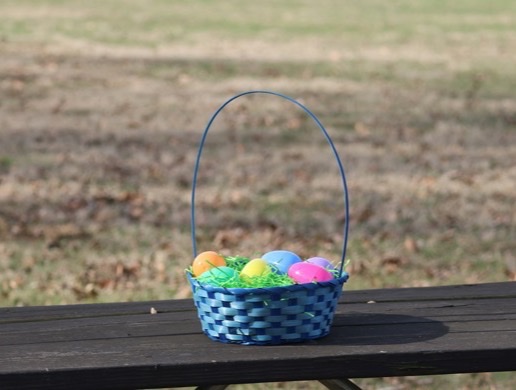
Egg hunts are the most searched-for Easter event, and the most commonly unclear. A parent scrolls past a pretty picture and then has to message you to ask the basics. Fix that, and attendance and replies improve.
Your hunt announcement should cover time, place, age range, price, what to bring, and how long it runs. Add a rain plan, a parking note and a clear line about allergies and what you provide. Keep the language warm and the details exact.
Safety and fairness deserve one line each. Say how you handle different age groups, for example a separate trail for toddlers. Say what you do about children who find fewer eggs, such as a small prize at the end for every child. These details are what parents screenshot and send to each other.
Do not publish children's faces without permission, and do not tag them. A photo of baskets, trails or decorated eggs tells the story just as well.
Design cautions for pastel spring posts
Easter design is usually pastel, soft and bright. That is fine, and it is easy to do well with a consistent palette and plenty of white space. A few cautions will keep your posts clear and respectful.
- Keep text large and high contrast. Pastel text on a pastel background is hard to read on a phone.
- Use eggs, flowers, spring colours and simple shapes. Avoid crosses, scripture or religious figures as background decoration.
- Do not use a cross, a tomb or a crucifixion image on a sale or promotional graphic.
- Keep the hours and cut-off date inside the image, since people share screenshots.
- Check that your colours work for people with colour blindness, especially pink and green combinations.
- If you use photos of food, show what is actually in the box, not a stock image of a different product.
What drives reach, engagement and conversion at Easter
Reach, engagement and conversion behave differently in a short, date-bound season. Treat the points below as things to test in your own Insights, not as fixed rules, since every audience is different.
Reach usually comes from the posts that people share with someone else: an egg hunt, a gift guide or a menu. These work because a parent or a friend forwards them with a question. A Reel of the kitchen or workshop can also bring in new viewers, particularly if it shows a process.
Engagement tends to come from questions and choices, such as a poll on box options or a request for family traditions. Keep these light, and avoid asking for personal religious views.
Conversion comes from clarity. A post with a price, a date, a link and a cut-off turns a look into an order. A post without those details turns into a direct message that asks for them, which is a sign you can fix the post.
If you are short on time, put effort into the three posts that convert: the menu, the cut-off reminder and the hours. Everything else is a bonus.
What to avoid in your Easter posts
Avoid these, and you will avoid most of the mistakes seen in the season:
- Using religious imagery, such as crosses or sacred figures, as decoration on sale graphics
- Joking about the crucifixion, the resurrection or Good Friday
- Posting a sale or a "last chance" countdown on Good Friday
- Over-posting on Good Friday and Holy Saturday, when many followers are in a reflective mood
- Writing "Happy Easter" on a Good Friday post, since the greeting belongs to Sunday
- Assuming every follower celebrates, or that Easter falls on the same date for everyone
- Making health or diet claims about chocolate or sweets, such as promising a detox or a guilt-free label
- Promising delivery dates you cannot meet, especially for perishable goods
- Posting children's photos without their parents' permission
- Copying a competitor's greeting or graphic word for word
- Using cheap puns that tie sacred days to sales, such as "resurrect your savings"
If you make a mistake, correct it quickly and plainly. A short "we got this wrong, thank you for telling us" earns more trust than silence.
How to measure your Easter posts
Start with the questions you want answered. Did the pre-order posts bring orders, did the hours post cut down on messages, and did the egg hunt post fill the event? Pick one number per goal and ignore the rest.
For orders, count them by source if you can. Ask new customers where they heard about you, or add a short note to your order form. For hours and event posts, watch the number of messages that ask for details you already posted, since a drop means the post is working.
For saves and shares, compare each post with your usual posts in your own Insights. A saved hours post or menu means a plan is being made. A post that gets likes but no saves and no orders probably looked nice and said little.
Write a short note after Easter Monday. Record which posts brought orders, which cut-offs people missed, what sold out, and what you would start earlier next time. Keep it with your calendar so next year's plan starts there.
Easter Instagram post ideas: your questions answered
When should I start posting for Easter?
About six to seven weeks before Easter Sunday for planning posts and polls, and four weeks before for pre-orders. For 2027, that means a gentle start in early February and a main selling push in March.
What dates should I put in my plan for 2027?
Western Easter Sunday is 28 March, with Good Friday on 26 March and Easter Monday on 29 March. Orthodox Easter is on 2 May. Check your local public holiday list, since Good Friday and Easter Monday are holidays in some countries and not in others.
Can I post about Easter if I am not religious?
Yes. A friendly greeting, your hours and a thank-you are fine for any business. Skip religious imagery as decoration and avoid jokes about the holy days.
Should I post on Good Friday?
Only if you have something practical to say, such as your hours or a closure. Keep the tone quiet and skip sales language, since many followers treat the day as solemn.
Should I run an Easter sale?
If it fits your business, keep it plain: a clear offer, a clear end date and no pressure. Many Easter products are pre-ordered or made to order, so a cut-off and a collection date are usually more useful than a discount.
What do I post if my audience celebrates Orthodox Easter?
Repeat the same timeline around 2 May, with the planning posts in late March and the cut-off countdown in mid-April. Ask your customers for service times and traditions, since they vary by country and by church.
How do I handle a mixed audience?
Keep the main greeting short and plain, and put practical details first. "Wishing a happy Easter to those who celebrate" with your hours below it works for most mixed audiences.
Find real Easter examples before you post
The ideas above are a starting point, and real examples show how they land. Search "easter egg hunt", "easter gift box" or "easter opening hours" in Socialmon to see which real Easter Instagram post ideas earned saves and comments, and which ones were ignored.
Do this in early February, while you still have time to change your plan. Note what the accounts in your area are posting, then do the practical thing they have missed, such as a clear cut-off or a proper hours post.
Related articles
- Valentine's Day social media post ideas that convert
- Florist Instagram post ideas that convert
- Bakery Instagram post ideas that get you orders
- Captions for Instagram with examples for every mood


Get 50 viral posts for your niche (free)