58 Pride Month social media post ideas with examples for 2027

In the first week of June, a customer scrolling past business accounts notices three things. Which logos have turned rainbow. Whether those same accounts did anything about it last year. And whether the post names a real person, a real group or a real action, or only uses the word "proud."
You are being asked a plain question: is there something true behind what you post? Pride Month gets a lot of attention, and that attention rewards substance and commitment over decoration. The best Pride Month social media post ideas are specific, agreed with the people involved, and backed by something your business actually does.
Below you get 58 Pride Month social media post ideas in seven goal groups, a three-question test for what is honest to post, advice for three kinds of business, a plain note on safety and local context, a dated timeline from early May to early July, a short caption bank and a list of things to leave out. Every example business is made up. If you want to see how accounts near you handle partner thank-yous and community posts, search "community partner" or "local business spotlight" in Socialmon and look at which posts got real replies.
What Pride Month is, and who it is for
Pride Month began as a response to a night of protest. In the early hours of 28 June 1969, police raided the Stonewall Inn, a bar on Christopher Street in Greenwich Village, New York City. The patrons fought back, and the protests that followed lasted several days. They became a turning point for LGBTQ+ rights activism in the United States.
A year later, in June 1970, the anniversary was marked by marches and demonstrations in several American cities. Those marches grew into the Pride events held around the world today. That is why Pride Month falls in June in the United States and in many other countries.
The rainbow flag
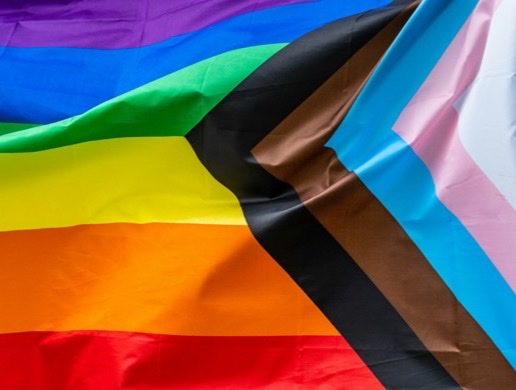
The rainbow flag most people recognise was created by the artist and activist Gilbert Baker, working with other volunteers. It first flew in San Francisco in 1978, and the original design had eight stripes. The flag has been redesigned and extended since, and several variations are in use. Treat any flag graphic as a symbol that belongs to a community, not a free decoration.
It is not on the same dates everywhere
June is the month in the US and many other places. Other countries and cities hold their main Pride events in other months, for local reasons such as history or weather. Some places run a whole season, not a single month.
If your customers are elsewhere, check when your own local event happens and move the timeline below to match. This page is written around June 2027.
Who the month is for
Pride exists for lesbian, gay, bisexual, transgender, queer and other LGBTQ+ people. It marks a history of protest and a living community, and in many places the risks that history involved still exist. Your account is not the centre of that story, but it can play a small, honest part if you arrive with something true.
Honouring, marketing or performing: a three-question test for Pride Month social media post ideas
Almost every Pride post falls into one of three types. You can tell which by asking who the post gives something to.
Honouring puts attention on real people, places or history, with facts you have checked. Marketing puts attention on your business, which is fine when it is honest, for example "we buy our coffee from a queer-owned roaster in the next town." Performing puts attention on how good your business looks for posting, and the post would read the same whether you did anything or not.
Run every draft through three questions before it goes out.
- Is it specific and true? A named partner, date or action that you have checked beats a general line about "love" or "pride."
- Does an LGBTQ+ person, business or organisation gain something besides attention? Pay, a booking, a referral, a donation or a hiring change all count.
- Would I stand behind this post in October? If it only makes sense in June, it is probably decoration.
A post that passes all three is safe to publish. A post that fails the second can still be honest, as long as it does not pretend to be a commitment. A short post that shares what you learned about local history is fine, provided you do not dress it up as something your business is doing.
Three business situations and what is honest to post in each
Your starting point changes what you can say. These are the three most common.
You run an LGBTQ+ owned business
You owe nobody a June campaign. Many LGBTQ+ owners get a wave of attention in June and then a quiet July, and some find the pattern tiring. You decide how much of your own story to share and how public to be.
If you do post, you have the most direct material: your work, your suppliers, your neighbours and the history of your own shop or studio. You can also use the month to point followers to other LGBTQ+ owned businesses and local groups you admire. That gives your audience a wider map, and it costs you nothing but a caption.
You have LGBTQ+ staff, customers and community ties
This is the largest group, and it needs the most care. Your honest material is what you actually know and do: who shops with you, who works with you, which local groups you have worked alongside and what you have changed in how you hire or serve people.
Do not speak for a community. Do not ask staff to represent a whole group, or to appear in a post they did not choose to appear in. Staff should never be assumed to be your public faces, and some may not be open about their identity at home or in the community. The safest posts are the ones where you are the one doing something, and someone else is the one being thanked or paid.
You have no obvious link
If you have no known LGBTQ+ staff, no clear customer ties and no local partnerships, you can still take part, but the bar is a little higher. The honest version is learning in public: you looked into the history of your own area, or you made a change to how you serve people, and you can say exactly what it was.
You can also begin a commitment you can keep, such as buying from an LGBTQ+ owned supplier, and post about it once it is real. If you have nothing real to say yet, staying quiet this June and building the commitment for next year is a respectable choice.
For a model of the same honest-posting approach in another observance, see our guide to Black History Month Instagram post ideas. It covers the same test and the same careful handling of comments from a different starting point.
Safety and local context come first
Before you plan any Pride Month posts, think about where your business and your people are. In some countries and regions it can be unsafe, or even illegal, for a business or its staff to post Pride content in public. In others, posting is safe for the business but can still put an individual employee at risk if they are named, tagged or shown.
Rules and attitudes differ by country, and sometimes by city, so this page does not list places. Check your own local laws and talk to people who know your area. If you are unsure, treat staff safety as the first question, and the post as the second.
What this means in practice
- Never ask or assume that staff will be public faces. Participation is always opt-in, and a no is final and needs no explanation.
- Do not tag, name or photograph partners, attendees or community members unless they have clearly agreed, and ask how they want to be described.
- Remember that a photo of a group event can show people who are not out. Check before you post, and crop or skip images when in doubt.
- Giving can be quiet. A donation, a fair contract or a standing hiring policy does not need a public post to be real.
- Customers and staff in other places may see your account too. Think about who the audience actually is, not just your street.
None of this means you must stay silent. It means the decision to post belongs to the people who carry the risk, and a safe, private commitment is better than a public one that harms someone.
Why Pride Month social media post ideas need a different plan
Most seasonal windows run on a countdown. You build up to a day, post the offer and move on. Pride Month does not reward offers, and the attention it gets is watchful.
Three things set it apart. People notice whether a business that posts in June is still doing the same thing in September. The topic is not a sale, and a discount tied to the month reads as using a movement to move stock. And the content that lasts is local: a rainbow graphic can be posted by anybody, but a thank-you to the youth group that uses your back room every Thursday can only be posted by you.
Most of the work happens before 1 June. Partners need notice, staff need a quiet way to say yes or no, and any claim about history needs checking.
The Pride Month social media post ideas timeline, from early May to early July
The dates below are for 2027. In 2027, 1 June is a Tuesday and 30 June is a Wednesday, and 28 June, the anniversary of the Stonewall raid, is a Monday. Pride events happen on many different dates, so check your local ones and adjust. In places where the main event is in another month, keep the shape and move the dates.
Phase 1: decide and commit (Monday 3 to Friday 14 May)
Decide whether you are posting, and what you can honestly put behind it. List the real things your business can do: buy from an LGBTQ+ owned supplier, refer customers to an LGBTQ+ owned partner, sponsor a local group, change a hiring or service policy, or share some checked local history.
At the same time, think about safety. Ask whether anyone on your team could be put at risk by a public post, and whether local conditions make posting unwise. Nothing is posted in this phase.
Phase 2: ask and prepare (Monday 17 to Friday 28 May)
Contact every partner you want to feature. Tell them what you plan to post, when, and what you will pay, buy or give. Let them see the draft first and change it, and agree who writes the caption on any joint post.
Ask staff, in private and in writing, whether they would like to take part in any way. Make saying no easy. If you plan a post about local history, spend this phase finding sources you can name, such as a library, an archive or a local historical society.
Phase 3: a quiet heads-up (Saturday 29 to Monday 31 May)
If you have a commitment, state it once, plainly, with the date it starts. A post such as "From 1 June we are buying our coffee from a queer-owned roaster and hosting a free monthly meeting for a local youth group" does the job. Do not build a countdown.
Phase 4: the opening week (Tuesday 1 to Sunday 6 June)
Post your commitment or your first partner spotlight early in the week and pin it. Keep the week light. One strong post, a few Stories and prompt replies to comments beat a post every day.
The first week is when most accounts post the same rainbow graphic. A named partner or a real action will stand out without trying.
Phase 5: the second week (Monday 7 to Sunday 13 June)
The first rush has faded, so a thoughtful post gets more notice. This is a good week for a partner spotlight with hours, an address and one plain sentence about what the partner does. If your local Pride event falls in this window, share the organisers' details, not your own spin.
Phase 6: the middle stretch (Monday 14 to Sunday 20 June)
This is the week for depth. Post something longer, such as a local history carousel, a reading list or a plain look at how you hire and buy. Use Stories to answer questions people have sent in.
Phase 7: the final stretch (Monday 21 to Sunday 27 June)
Phase 7: the final stretch (Monday 21 to Sunday 27 June)
Many Pride events fall in the last two weekends of June, though dates vary a great deal by place. If you are taking part in one, post practical details and thank the organisers. Share what you have actually done so far, with real numbers such as hours donated or orders placed.
Phase 8: the anniversary and follow-through (Monday 28 June to Monday 5 July)
Monday 28 June is the anniversary of the Stonewall raid. A short, factual post about the history can sit well here, with a source named. Then say what you will keep doing after the month.
This is the week most businesses skip, and the one that proves the rest. Post an update that shows the commitment continues, such as a repeat order or a standing line on your site. Write down what to change next year, and keep the plan and partner list in a shared document so someone else can pick it up in May.
The 58 Pride Month social media post ideas, grouped by goal
Use this list as a menu. Pick a few Pride Month social media post ideas from each group that your business can honestly do, rather than trying to post everything. The groups run from deciding and giving, through welcome, staff and history, to what happens after June.
Decide what you stand behind before June starts
- A short post stating one real commitment for June, with the date it begins
- A Story explaining in two honest sentences why you are taking part this year
- A post that admits what you have not done in past years and what you are changing
- A pinned post listing every commitment you are making, so anyone can check on it later
- A Highlight called "How we do this" that collects your hiring, sourcing and service policies
- A Story asking customers which local LGBTQ+ groups they would like to see you work with
- A note from the owner on how the month will be handled, including that staff choose whether to take part
- A post saying clearly what you are not doing this June, such as no sale and no merchandise, and why
Put money, time and work behind LGBTQ+ people and groups
- A post announcing a donation to a local LGBTQ+ organisation, with their permission to be named
- A Story from a community event you supported, showing what your money or time achieved
- A post offering your space for a local group's meeting or workshop, with their name and booking details
- A joint post with a group you have booked and paid for a talk, class or performance
- A post sharing a volunteer sign-up from a local group, with their link
- A post that says exactly what you gave, such as hours, funds or goods, without rounding up
- A thank-you after an event, using the group's own words if they want to share any
- A post about a paid contract with an LGBTQ+ owned freelancer, with their agreement
- A post explaining that you donated to a group privately, written only if the group is happy for you to mention it
Support LGBTQ+ owned businesses and creators year round
- A spotlight on one LGBTQ+ owned business you buy from, with what you buy and why
- A "where we send people" post naming an LGBTQ+ owned partner you refer to when you cannot help
- A Story listing three LGBTQ+ owned places in your town that you use yourself
- A post announcing a supplier change, with the partner's name and what you now buy from them
- A carousel of a creator's work, with their permission, credit and a link to their page
- A Reel showing a partner's product in use in your business, approved by them first
- A post that says what you paid a creator for a commission, as plainly as you can
- A standing line on your website or menu that credits LGBTQ+ owned suppliers all year
Make your space and service welcoming, with proof
- A post about a concrete change, such as a policy on respectful treatment of every customer
- A post showing how you ask customers for their name and pronouns on forms, if you have changed that
- A post about training your team to handle rude or hostile customers calmly
- A Story showing a signed or posted policy that staff and customers can read
- A post about a hiring change, such as a role advertised through LGBTQ+ job boards, with the pay stated
- A post describing a quiet-hours or private-appointment option, if it helps some customers feel safe
- A post about making a restroom, changing room or booking form more inclusive, with what changed
- A post inviting customers to tell you privately how to make the space better
- A post explaining that a mistake was fixed after a customer pointed it out, with thanks
Let staff take part only if they choose
- A staff-written note about a book, place or person that matters to them, posted only if they want it posted
- A team recommendation list of films, music or podcasts, with no one required to take part
- A Story takeover by a volunteer, who has full control over what goes up
- A post where staff choose a local business or group to thank, with no comment from you on their reasons
- A post celebrating a staff member's work milestone, unrelated to Pride, to show they are more than a topic
- A short post about how you ask staff for input, so followers see that consent is part of the process
- A behind-the-scenes post with no faces, such as the shelf, the display or the table, if staff prefer to stay unseen
Share history and learning that you have checked
- A short post on the Stonewall anniversary, with a named source and no embellishment
- A post that explains where the rainbow flag came from, using facts you have verified
- A carousel on local LGBTQ+ history, using records from a library or archive
- A Story asking long-time locals what they remember about a venue or group that closed, with a reminder to share only what they are comfortable sharing
- A "this building" post about a local landmark and its history, written with a local historical society
- A reading list of books by LGBTQ+ authors, chosen by your team, with a line on each
- A recommendation for a local library, museum or archive event, with the date and address
- A post that explains what a Pride event near you is, with the organiser's details and dates
- A "what I got wrong" follow-up if someone corrects a detail in an earlier post
Keep going after June and handle comments well
- A July post that says what you will keep doing from now on
- A pinned reply to a common question, explaining your choices in plain words
- A comment reply that thanks a critic and states what you will check
- A post sharing one lesson from the month and one thing that did not work
- A Story showing a repeat order, referral or donation in September or later
- A post that says plainly that abusive comments will be removed, so everyone knows the rule
- A post on next year's plan, with the date you will start preparing
- A Highlight that keeps your commitments visible and updated all year
How to use each group of Pride Month social media post ideas
The list is long on purpose. The work is choosing a few things you can honestly stand behind, then doing them well. These notes help you pick from each group.
Deciding what you stand behind
The aim of the first group is a promise small enough to keep. A caption that works well is "From 1 June we are buying our coffee beans from a queer-owned roaster in the next town. We will post the first order when it arrives." Keep a pinned post updated as things happen, and if you cannot complete something, say so in the same place.
Giving money, time and work
This group is the strongest, because it gives something beyond attention. Pride began as protest, and the tradition that fits it best is giving, not displaying. Before you name a group, ask them. Tell them what you will say, what you will link to and what you are giving, and accept it if they would rather not be thanked in public.
Letting staff choose
The rule is simple. Staff choose whether to take part, what to say and what to leave out, and neither choice is questioned. Do not ask anyone to represent a group or to tell a personal story for your account. Some people will say no because they are not out, and you may never know that.
Our guide to meet the team Instagram post ideas has more ways to feature staff respectfully. The faceless behind-the-scenes post is useful here, because it lets a team take part without anyone being identified.
Sharing history and learning
Use a source you can name, and put it in the caption. If you are not sure of a date, leave it out or say it is approximate. Do not use a person's photo or story without permission, and do not guess at names or events. If a community member corrects you, thank them, fix the post and say so.
Pride Month Instagram captions you can adapt
Good Pride Month Instagram captions are short and specific. They name the thing, the partner, the date or the action, and they let the photo carry the mood. Use these as starting points and swap in your own facts. All names are made up.
Never quote a figure or a historical detail unless you can name the source. If a quote card has no clear origin, leave it out.
Commitment captions
- "From 1 June we are buying our coffee from a queer-owned roaster in town. We will share the first order when it arrives."
- "We have not done enough of this in past years. Here is one thing we are starting, and what we will report back on."
- "A short list of what we are doing in June and after. We will update it as things happen."
Partner and community captions
- "This is where we send people when we cannot help. Hours and address below."
- "We booked Northgate Players for our open mic night and paid their full rate. Here is a clip, shared with their approval."
- "Thanks to the Riverside Youth Alliance for using our back room every Thursday. They asked us not to post photos, so here is the room before everyone arrived."
History and learning captions
- "The Stonewall Inn raid began on 28 June 1969 in New York. Here is a source if you want to read more."
- "We got a detail wrong in our last post. Thank you to the reader who corrected it. The fix is above."
- "Our team each picked a book by an LGBTQ+ author. Swipe to see what and why."
Pride Month ideas for small business: picking by business type
A small team cannot do every one of these Pride Month Instagram post ideas, and should not try. Pick one or two commitments you can keep. The best Pride Month ideas for small business are the smallest ones done well.
- Cafes and restaurants: feature an LGBTQ+ owned supplier, show the order and keep it on the menu after June.
- Shops and bookshops: stock and credit work by LGBTQ+ makers and authors, with permission, and pay on time.
- Service businesses such as plumbers or cleaners: share a real referral relationship, a respectful-treatment policy and an open role with pay stated.
- Gyms and studios: open your space to an LGBTQ+ led class or group on a fair or free basis, and post only what they agree to.
Pride Month posts for brands
Larger brands face a different risk, which is scale. A national account that posts a polished campaign in June and says nothing else will be noticed. The strongest Pride Month posts for brands match what the company does all year: a supplier programme, a hiring policy, a standing donation or a long partnership.
If you run a brand account, feature only staff or partners who chose to take part, and approve nothing that uses a person's image to sell a product. Think about every market your account reaches, since the same post can carry different risks in different places. Report on what happened later in the year, not only at the start.
A worked June for a made-up bookshop
Here is an illustration of Pride Month social media post ideas working together. Lantern Row Books is an imaginary neighbourhood bookshop with five staff. The names are invented and no real business is meant.
In the first half of May, the owner decides on two commitments: a free monthly meeting space for a local LGBTQ+ youth group, and notebooks and cards from a queer-owned stationery maker. The group's organiser asks that no photos of the young people ever be posted.
In the second half of May, she writes to her four staff, in private, to say they are free to take part or not. Two say yes to a recommendation list of books, and two prefer to stay out, so the other two are left completely off.
On 31 May, the shop posts: "From 1 June we are hosting a free monthly meeting space for a local youth group and buying our cards from a queer-owned stationery maker. We will share what we do and when." On 1 June, the shop pins it.
On 9 June, the shop posts a spotlight on the stationery maker with a link. In the third week, it posts a staff reading list, and a photo of the shelf with no faces. A customer points out that one recommended author is not in fact LGBTQ+. The owner checks, edits the caption and thanks them.
One comment under the pinned post is abusive. The owner hides it, blocks the account and does not reply. On 28 June, the shop posts a short, sourced note about the Stonewall anniversary and says the meeting space will continue.
In the first week of July, it posts a photo of the second stationery order arriving. In five weeks, the shop made about seven posts and used Stories for the rest. None were about the shop's own prices, and none showed the young people.
What drives reach, engagement and conversion for Pride Month social media post ideas
Reach is not the main aim of Pride Month social media post ideas, and chasing it is one of the quickest ways to go wrong. Still, it helps to know what tends to do what, so that you can set expectations.
Partner spotlights and local history carousels are the most likely to be shared, because they give people something new about their own area. Questions about local memory tend to bring replies, and reading lists tend to be saved. Partner spotlights with clear details, such as hours, an address and a link, send real traffic to the partner.
For your own business, the strongest result is often quiet: a new supplier relationship, a better set of job applicants or a firmer tie with a local group. None of that shows up as a number on a post.
What not to post
This list matters more than any idea above. Most of the damage in June comes from posts that should not have gone out.
- A rainbow logo swap with nothing behind it. It costs nothing and says nothing. If you change your logo, say what you are doing as well.
- A one-day Pride sale. It turns a movement into a promotion.
- A discount tied to the month. Do not link prices or offers to Pride in any way.
- Merchandise with no giving. If you sell anything with Pride branding, say where the money goes, or do not sell it.
- A stock photo montage with a generic caption. It shows no work and no knowledge, and people notice.
- Jokes about identity. Never joke about anyone's identity, pronouns or relationships.
- Speaking for a community you are not part of. Share what you did, not what "the community" feels.
- Using someone's photo or story without consent. Ask first, show the draft and accept a no. This includes group photos where someone may not be out.
- Making staff the face of the campaign. Never tokenise an individual or assume they will take part.
- A pledge with no action behind it. If you will not do it, do not say it.
- One month of posts, then silence. If the only time your account mentions this is June, people will see it.
How to handle comments and backlash
Plan for comments before you post, because some will be unkind. Decide in advance who replies, what they will say and where the line is. Write it down so it does not depend on one person's mood on the day.
Hide or delete abusive or hateful comments, in line with your own policy, and block accounts if needed. You do not have to debate them. Reply once, calmly, if a reply is useful, such as "We will keep the comments open for questions about our commitments." Then stop. Do not argue, and do not reply to bad-faith threads.
Protect your staff. Do not let one person carry the comment section alone, and do not name staff in replies.
Avoid pile-on engagement
Do not quote a hostile comment to rally supporters or invite your followers to pile on. It puts the commenter, and often your own staff, in a worse spot. Do not reward outrage with extra attention either.
Keep honest criticism
Do not delete honest criticism just because it is uncomfortable. If someone says you have missed something, such as a claim that is wrong or a group you left out, take it seriously. Correct the post and say so. Other people may have seen it, and deleting it usually makes things worse.
How to measure your Pride Month Instagram post ideas
Do not judge the month by reach or likes. A thoughtful post can get a modest response and still do exactly what you wanted. Look at things that show whether the work is real.
- Did partners say the posts were accurate, and did they receive customers or enquiries?
- Did you place the orders, make the donations or complete the changes you promised?
- Did local people add information or corrections to your history posts?
- Did you receive job applications from a wider group of people?
- Did staff feel comfortable with how the month was handled?
The July check
In the first week of July, write a short note for yourself. Cover what you did, what you said you would do and what is still open. Share it with your team and partners if it helps. Next May, start from that note, not from a blank page.
Pride Month social media post ideas: your questions answered
Should I post about Pride Month if my business is not LGBTQ+ owned?
You can, if you have something true to say and some action behind it. Many businesses have real links through staff, customers, suppliers or local partners. If you have none yet, learning and building a commitment for next year is a good choice.
Is it safe to post Pride content?
It depends on where you and your staff are. In some places it can be unsafe or illegal for a business or its staff to post publicly, and rules differ by country. Check local conditions, ask the people who would carry the risk, and put staff safety first.
What are the dates for 2027?
In the United States and many other places, Pride Month is June 2027, from Tuesday 1 June to Wednesday 30 June. Other places mark Pride at other times, and local events happen on varied dates, so check your own.
How do I feature a person or business without causing harm?
Ask first, show the draft and let them decide how they are described. Pay or refer them in a real way if you can. If they say no, accept it without comment, and never tag or show someone who has not agreed.
What if someone leaves an abusive comment?
Hide or remove it according to your own policy, and block the account if needed. Reply once, calmly, only if useful. Do not argue and do not invite a pile-on.
Find real Pride Month examples before you post
The ideas above are a starting point, and real accounts show how they land. Search "community partner", "local business spotlight" or "supplier spotlight" in Socialmon to see which real Pride Month Instagram post ideas earned saves and replies, and which fell flat.
Do this in early May, while you still have time to change your plan. Note what accounts in your area are posting, then do the practical thing they missed, such as naming a partner, stating what you gave or saying what you will keep doing. The Pride Month social media post ideas that last are the ones with an action behind them.
Related articles


Get 50 viral posts for your niche (free)